
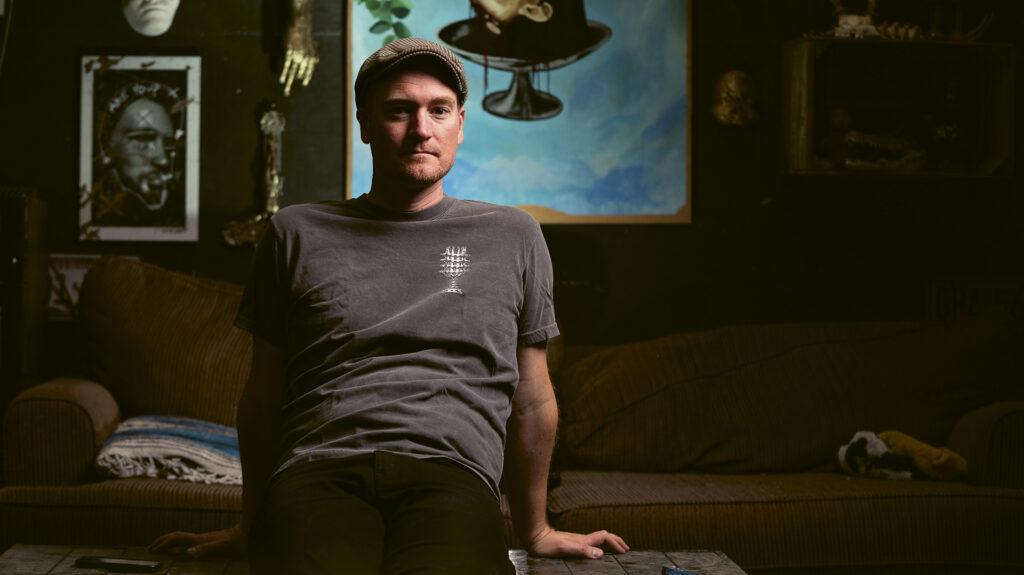
The Blood of Gods founder doesn’t just publish a zine—he curates a world. One where metal and wine go hand in hand.
WORDS Lauren Buzzeo
Metal. Mayhem. Wine. What more is there to say?
As the founder and driving force behind the fiercely independent metal-and-wine publication Blood of Gods, Stacy Buchanan has built a platform that celebrates heavy music with intelligence, reverence and a sharp editorial edge. Oh, and a glass of wine in hand, too.
With a background rooted in media and an unshakable passion for fresh riffs and music culture, Buchanan’s career has been anything but accidental. From pen and paper to amps and mics, he developed his skill set through years of immersing himself in the business of creative production. Lots of it.
His experiences behind a keyboard and on the road sharpened not only his editorial instincts but also his understanding of branding, audience engagement and the grit required to sustain an independent publication.
His zine, Blood of Gods, emerged from that intersection of experience and obsession. What began as a passion project quickly evolved into a respected outlet known for engaging interviews, in-depth features, insane art and an unapologetic dedication to heavy metal and wine in all its forms. And beyond the printed page is a world of BoG fandom, complete with an annual Merrymaking event that no self-respecting wine or metal head wants to miss out on, and everyone in Buchanan’s orbit wants to be a part of.
The approach is equal parts fan and professional. It’s enthusiastic yet exacting. And it’s so captivating, you just can’t quit it.
We talk with Buchanan about carving out his own space in the wine landscape, staying authentic in a digital age and why wine culture continues the need to evolve.
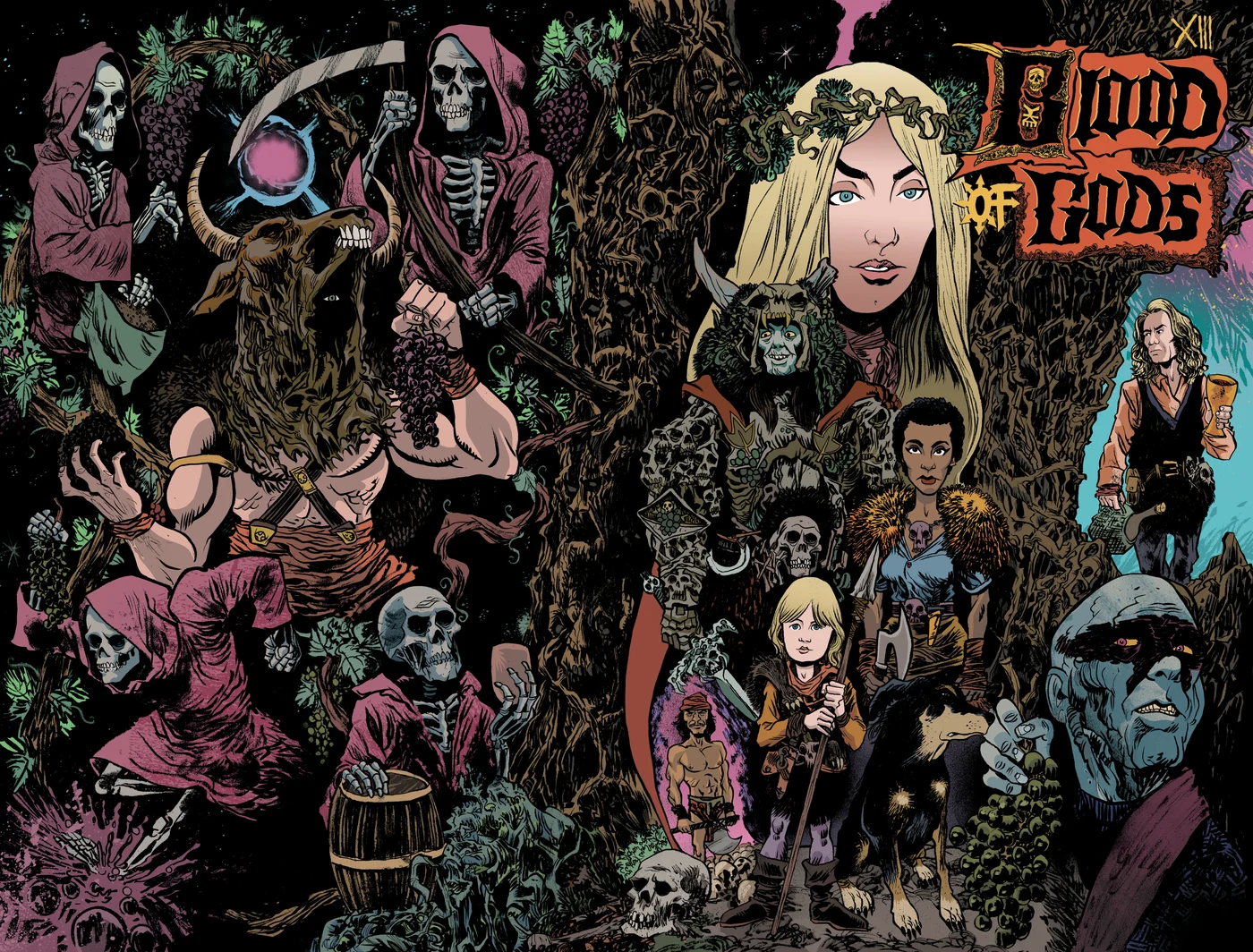
Blood of Gods Issue #13 – Spring/Summer 26
You once asked me this question, and now it’s my turn: Why Metal and Wine?
Because they’re driven by the same impulses. Both metal and wine are rooted in craft, tradition, obsession, place and a willingness to co-create with the unknown. Both reward patience and deep listening—or deep tasting. Both build communities that share knowledge, argue passionately about details and treat the experience as something more meaningful than simple consumption.
The difference is mostly cultural packaging. Wine has been framed as refined and exclusive, while metal has been framed as provincial and transgressive. But beneath that surface, they’re both about people trying to make something honest and powerful and then finding others who understand it.
Blood Of Gods exists because when you remove those artificial barriers, the overlap becomes obvious. You see winemakers who love extreme music, metal fans who are deeply curious about craftsmanship and a shared appreciation for things that are uncompromising, expressive and made with intention. They’re not opposites—they’re parallel traditions that were separated by class signaling. They’re siblings that grew up in different neighborhoods. So the real question isn’t “Why metal and wine?” It’s “Why were they ever kept apart?”
Visually, Blood of Gods takes a decidedly metal and marvelously unstuffy approach to wine content. What was the initial feedback you got on the zine’s style and how are people, especially those in the industry, responding to it today?
It’s taken me some time to realize this, but the art is almost a bit of a red herring. It was never meant to be the main focus of Blood Of Gods. Because the visuals are unconventional for wine, especially with heavy metal riding shotgun, they create a kind of productive dissonance. People pause and think, “Wait… what is this?” That moment of confusion is actually valuable. Instead of skimming, they slow down and engage more deeply with the content. The art becomes a doorway rather than the destination.
I say that now with the benefit of hindsight, because at the beginning it wasn’t a calculated strategy at all. I just wanted to make wine feel a little more badass, a little more fun and frankly more enjoyable to approach. What’s been gratifying is how the industry has responded over time. Initial reactions ranged from curiosity to skepticism, but as people spent time with the writing, they realized the rigor and respect for wine were still there, just presented through a different cultural lens. Now, many producers tell me it reaches audiences they struggle to connect with elsewhere, which feels like the whole point.
Indeed, wine has always had a bit of an approachability problem, and the industry is in a pretty weird place right now overall. What do you think is needed to drive lasting and meaningful growth and connection ahead with new drinkers? Can wine be saved or, like Metallica for the masses, reinvented with success?
I have to believe it can be reinvented—I’m an eternal optimist. But you’re right that wine is in a strange, almost existential moment. It reminds me of that scene in Zoolander where Derek stares into a puddle and asks, “Who am I?” The industry is doing a version of that right now.
In some ways, though, this discomfort is healthy. It’s forcing wine to confront assumptions that went unchallenged for decades. There aren’t any shortcuts through that kind of reckoning; the only way forward is through it.
One obstacle has been a tendency toward insularity. For a long time, many decision-makers were comfortable with the status quo, which made it harder for new perspectives to gain traction. But lasting growth won’t come from repackaging the same ideas. It requires genuinely inviting new voices into positions of influence, not just as consumers but as collaborators. The most forward-thinking producers I know are already doing this: listening to younger drinkers, partnering across cultures and disciplines, and treating curiosity as an asset rather than a threat.
Succession isn’t just about ownership—it’s about mindset. Wine doesn’t need to abandon its history, but it does need to loosen its grip on exclusivity. If it can stay rooted in craftsmanship while becoming more porous, more welcoming and more culturally engaged, then yes, reinvention is absolutely possible. In fact, it’s already happening in pockets.
“Heavy music and serious wine both have reputations for being intimidating, but when you put them together in a thoughtful way, the result is disarming, welcoming and even a little magical.”
How have your tastes in both music and wine evolved over the years since starting the zine?
My tastes continually evolve and expand in all directions, sometimes in surprising ways. I feel like I wear a self-satisfied smirk when I’m listening to something that is so batshit crazy, so over-the-top, so extreme… I can feel my inner-monologue smugly thinking, “Yep… I’ve still got it.”
But then, there are more conventional or widely regarded artists, like Bruce Springsteen or Leonard Cohen, who can crush you in a completely different way. They can devastate your heart and emotions, or they can break your spirit like a twig. I think my appreciation for them has deepened because they’re more nuanced, they can be restrained in a way that packs so much into the margins… they are true creatives and adherents of craft.
My taste in wine mirrors that same evolution. More recently, I’ve been drawn towards medium-bodied reds that have more complexity and range, more layers to sit with and explore. Again, going deeper and discovering more multi-dimensionality. But then, the counter-side is just as present, where I simply need a skullcrusher that does not give a single fuck about balance. Sometimes that’s just what the doctor ordered.
Let’s talk Merrymaking—what makes the BoG annual event unique?
What makes Merrymaking unique is that it doesn’t feel like an industry event or a typical wine festival. It feels like a temporary community. For one weekend, people from very different worlds—winemakers, metalheads, artists, collectors, curious newcomers—all end up in the same rooms having real conversations. No VIP rope, no posturing, no sense that you need to “belong” first. We built it intentionally so there are no spectators. Everyone contributes something: a bottle, a story, a band, an artwork, a perspective. That shared participation changes the energy completely.
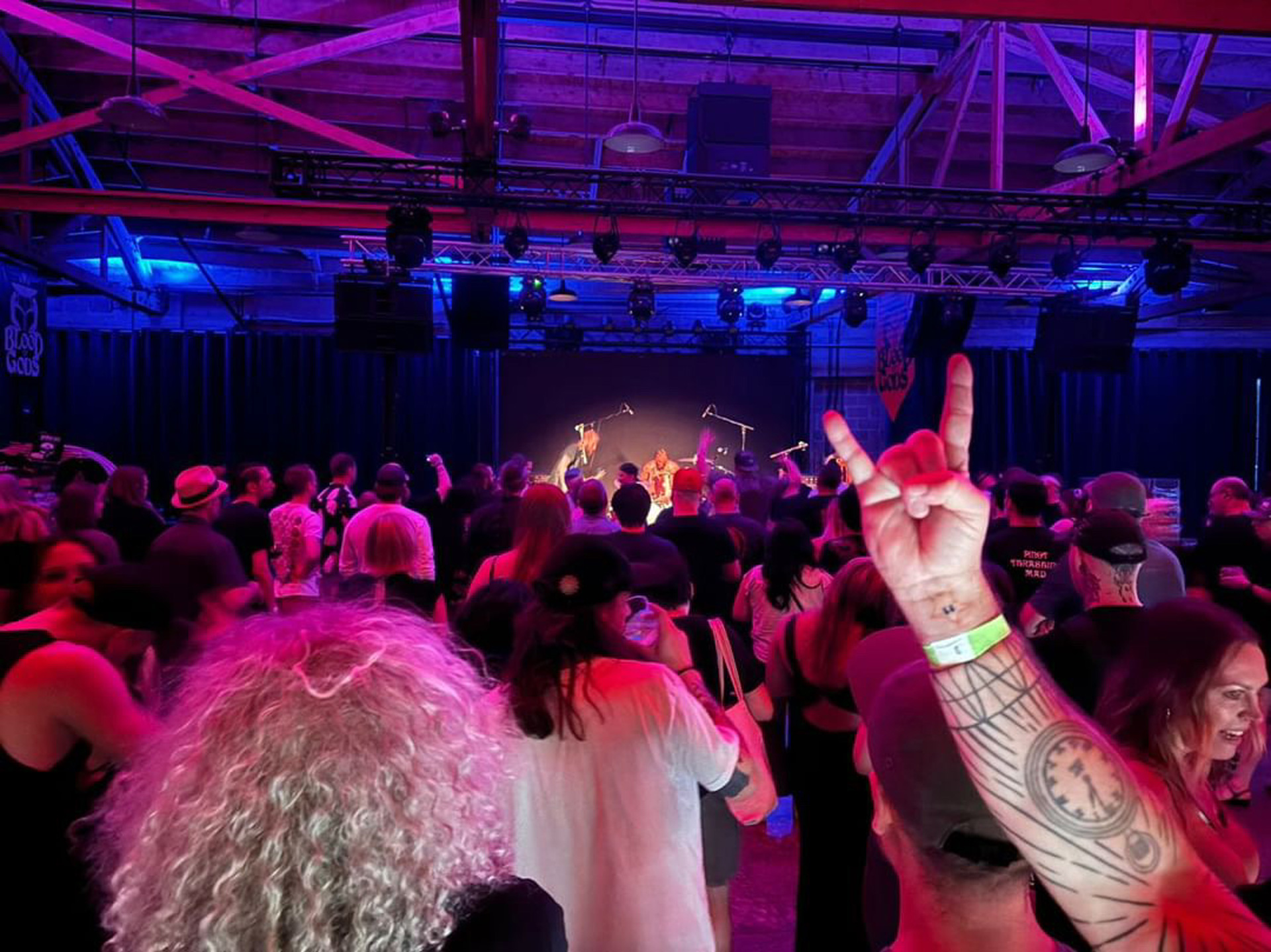
It’s also surprisingly joyful. Heavy music and serious wine both have reputations for being intimidating, but when you put them together in a thoughtful way, the result is disarming, welcoming and even a little magical. By Sunday, people who arrived as strangers are making plans to visit each other across the country.
That’s the part I’m proudest of—not just the programming, but the relationships that keep going after the weekend ends. I know that all sounds very posi and “Bob Ross,” but it’s true. Heavy metal might be the cornerstone, but the whole thing feels more like a big hippie love-fest that wandered into a comic convention with supremely baller wines and a brutal soundtrack.
From a purely hedonistic angle, it’s also just wildly fun. People of all ages getting tattooed, tasting wine, headbanging, watching live artists create, seeing burlesque, asking fascinating people thoughtful questions, joining wine clubs, commissioning poems, making new friends, buying art and merch… the list goes on. It’s basically a choose-your-own-adventure weekend where curiosity is the only requirement.
What are some of your favorite music and wine pairings?
It’s less about a single pairing and more about moments of recognition. Sometimes I’ll be listening to an album or tasting a wine and suddenly realize I’m using the same vocabulary for both. The density, the texture, the sense of tension or openness, the way something unfolds over time—those qualities translate surprisingly well across sound and flavor. It’s not quite synesthesia, but something adjacent to it. The production of a record can feel “tight” or “loose,” “bright” or “dark,” “polished” or “raw”—the same words we use for wine. When those parallels line up, it creates a kind of mental harmony that’s incredibly satisfying.
For me, the connection isn’t about matching genres to grape varieties so much as recognizing that both music and wine are time-based sensory experiences shaped by human choices. When they resonate structurally, not just thematically, it feels like discovering a hidden rhyme between two completely different languages.
This article was published in the Spring 2026 issue of Full Pour. Don’t own it? Pick one up today!